
|
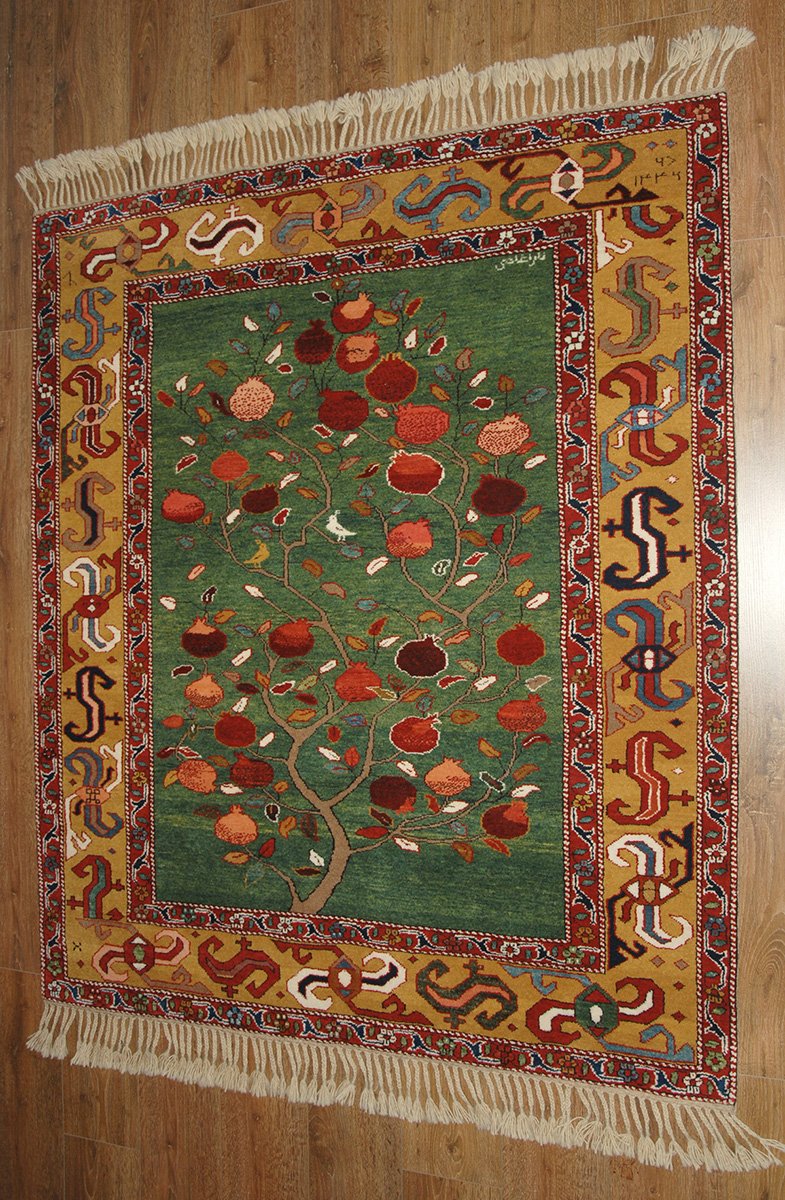
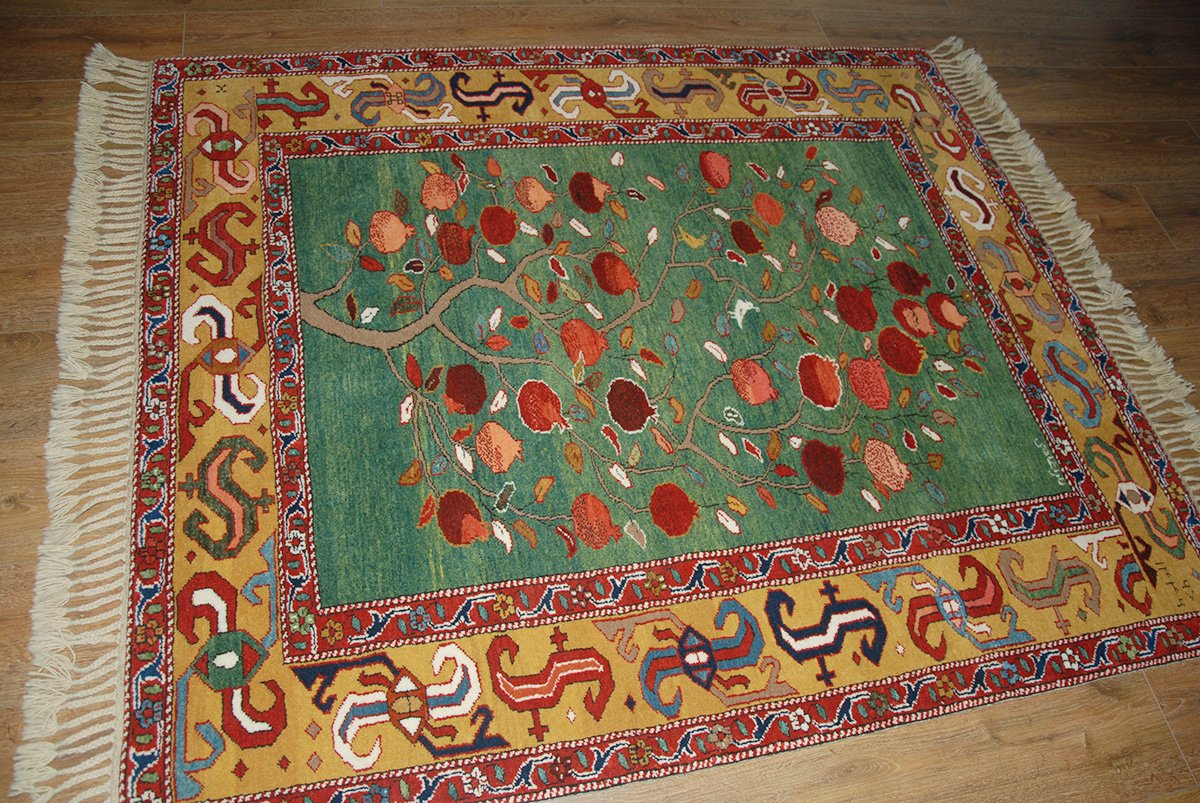
Green ground Pomegranate Tree rug in a swastika
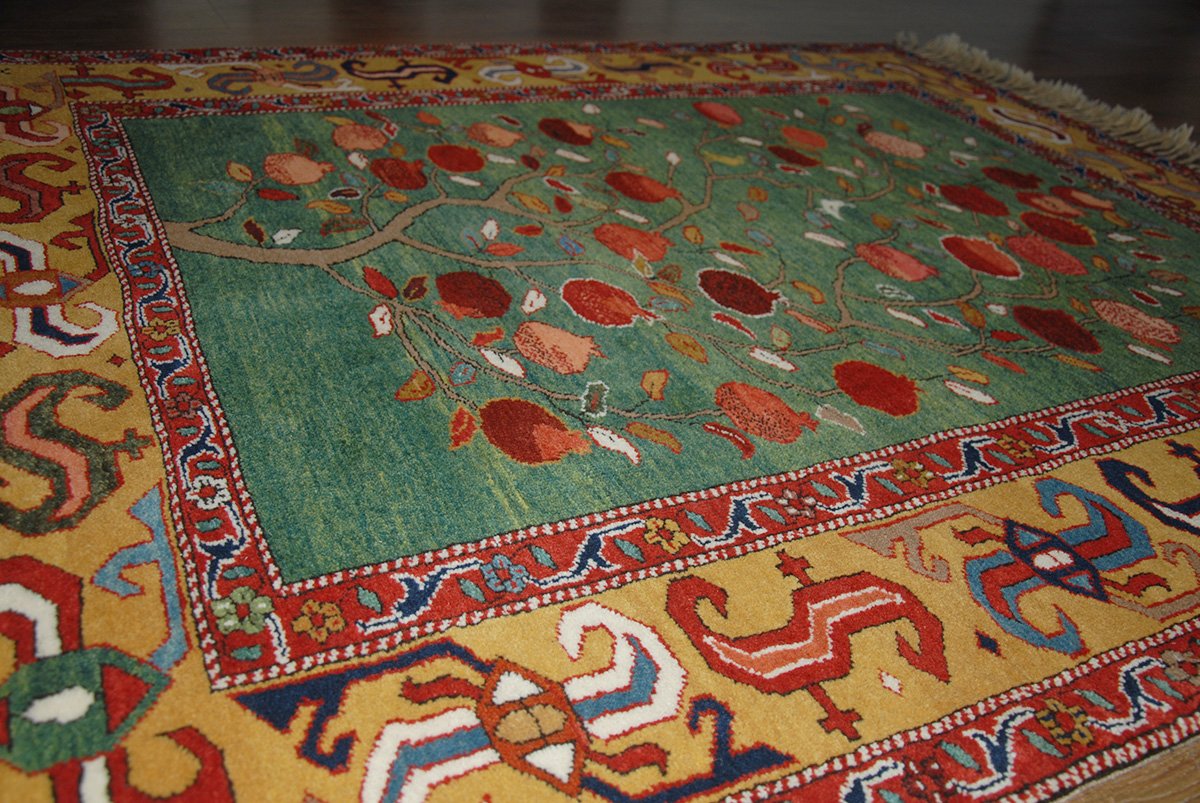
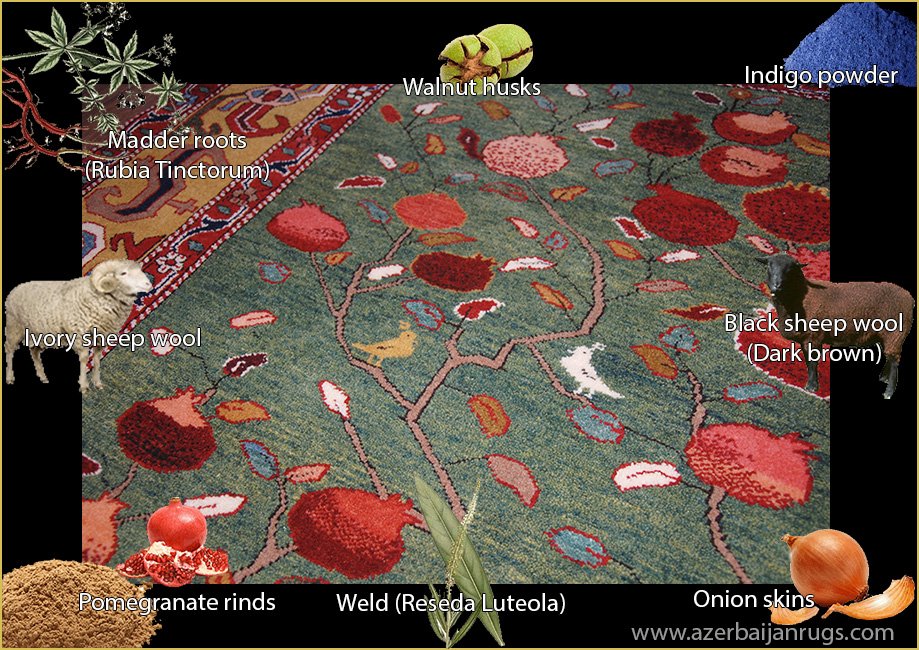
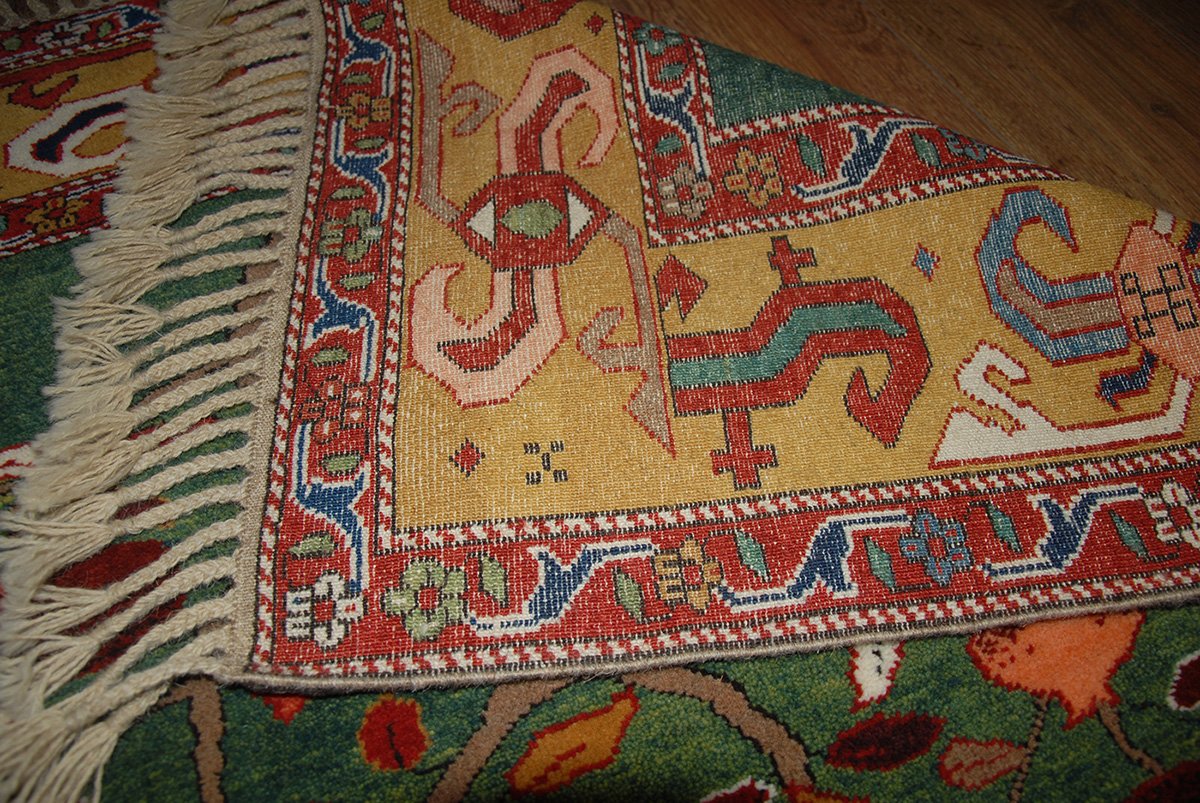
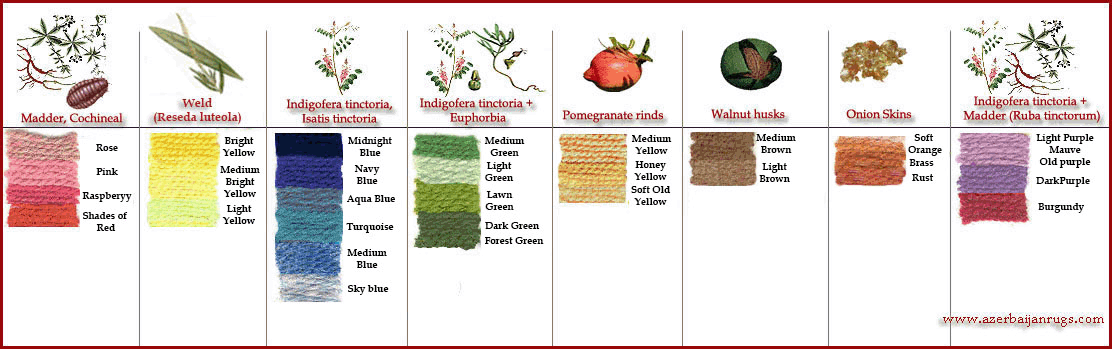
motif main border Code: PTGR12 Size: 143x168cm Size (ft): 4' 8" x 5' 6" Area: 2.4 m2 Density: 165 000 knots per square meter, totally ~400 000 knots Colors: variegated lawn green, light green, yellow, apricot, red, terracota, light brown, mustard, midnight blue, medium blue, navy blue, ivory, dark brown, cinnamon, maroon Dyes: madder, weld (Reseda Luteola), cochineal, onion skins, indigo, pomegranate skins, walnut husks, natural dark brown sheep wool, natural ivory sheep wool. Materials: Handcarded and handspun wool for pile, ivory wool warps and ivory wool wefts and white cotton wefts - (two shots). 1cm of flatwoven kilim ends at both sides. - wool on wool Knots: Gördes (Turkish, symmetrical) Pile height: 0.7 cm Ends: thin plaited fringes Inscriptions: Inscriptions & Epigraphy: Afshar Tribal Seals (Tamga): Two Afshar tribal tamgas rendered in the upper-left and lower-left main border corners.   Kufic Inscription: The phrase "Nar Aghajy" (Pomegranate Tree) stylized in Kufic script, located in the upper-right central field. Weaving Date: Inscribed in the upper-right main border corner. Orkhon-Yenisey Runic Inscription: The word "Nar" rendered in ancient Orkhon-Yenisey runic script in the upper-right main border corner. (Note: The weaver erroneously executed the characters to read as "Or" or "Ur"; however, the intended word is "Nar".) Weaver: Maryam, Nargiz Weaving Period: Four months Handwoven in Azerbaijan Design: In Azerbaijani culture, the pomegranate serves as a profound symbol of fertility, abundance, and vital life energy. In this piece, the ground color of the main border is achieved through natural dyeing techniques using pomegranate rinds combined with weld (Reseda luteola). The main border features a prominent swastika motif, a historical design element frequently documented in 18th-century Azerbaijani carpets. Across different historical periods, this motif has carried deep symbolic nomenclature in regional textile traditions: referred to as Charkh-i Falak (the Wheel of Fortune/Life) during the medieval era, and rooted in the ancient designation Öz, representing divinity and supreme spiritual power. The minor border presents a graceful floral meander motif adapted from classical Safavid prototypes. |
Contact us for more information about this rug
Contact us for more information about this rug
|
For more information about the above rug or to place an order please email
vd@azerbaijanrugs.com |