|
The present group
represents a subgroup of rugs featuring the characteristic design of a
narrow field containing an abstract geometric tree motif in a latticed
field and the paired palmettes evoke the image of two birds positioned
face to face. Most known examples of this subgroup are executed on a
brown ground and are framed by flowing flower-bud meander border,
enhancing the elegance of the overall design. These rugs are notably rarer
than their counterparts and generally appear to belong to the
pre-commercial phase of production.
These differ from
classical Kuba rugs in both weave and coloration. Most examples feature
light red wefts, and in many cases the kilim ends are executed in the same
colour (In pre-commercial-period Kuba rugs, light red wefts are observed,
and the weave structure generally differs from that of later productions).
The selvedges are either red or, in some instances, in different colours,
often wrapped around three or more cords (this feature also observed in
rugs produced in northern Kuba villages such as Alpan and Zeykhur).
Although a small number of examples from the west of the country are also
known, yet these pieces do not comfortably fit within the Kazak or
Karabagh classifications. They were most likely woven in a region between
northern Kuba and Derbent, circa 1850–1870.
The following examples
illustrate the range and characteristics of this rare subgroup.
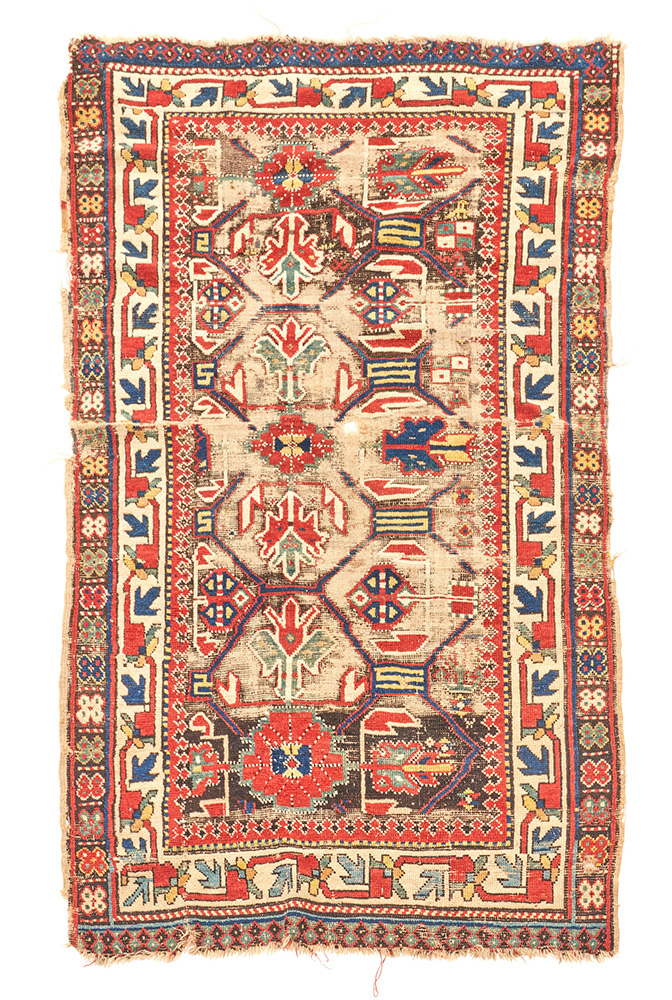
The present rug originates from the distinguished collection of the late
Jim Dixon. Despite its compromised condition, the chromatic palette is
remarkably well preserved, and the piece ranks among the best extant
examples of this rare subgroup, of which fewer than a handful are known.
Although earlier scholarship has suggested a date in the first half of the
19th century, a more prudent dating would be circa 1850–1870. The rug
measures 3 ft. 8 in. by 6 ft. 1 in.
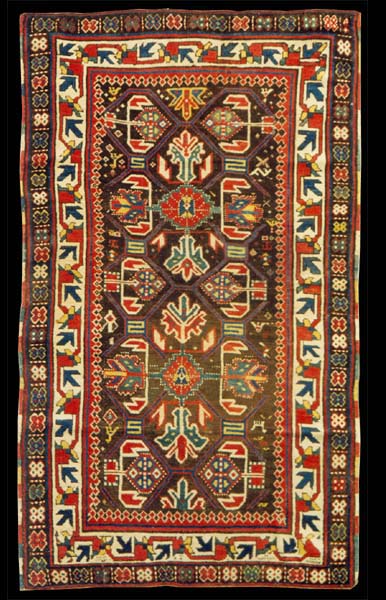
Another fine example
was from the Rahmanan collection. Well-balanced
composition with outstanding color harmony.
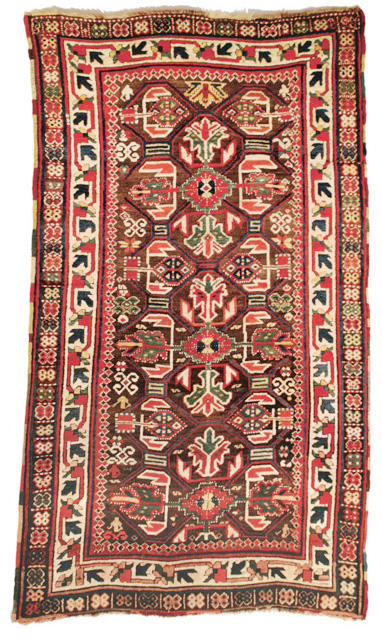
A further noteworthy piece was published in
HALI, issue 167, and belonged to
Herbert Bieler of Vienna at the time, where it was presented as a Karabagh
rug.
|
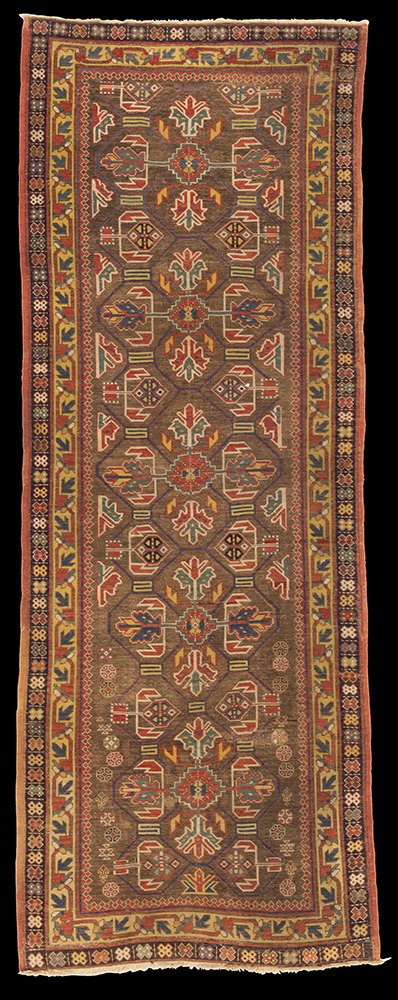
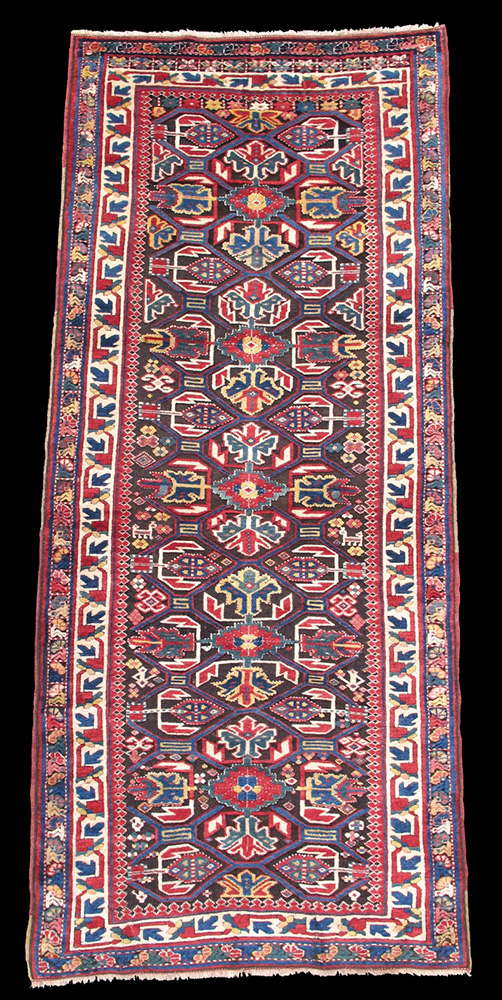
A number of long-format examples are also known.
This example
presented as Daghestan, was sold at auction in London recently for GBP
3,810.
And this rug, attributed to the Kuba region back then, was offered
for sale in Germany in 1992 and is distinguished from other related
examples by the presence of a carnation motif in the outer minor
border
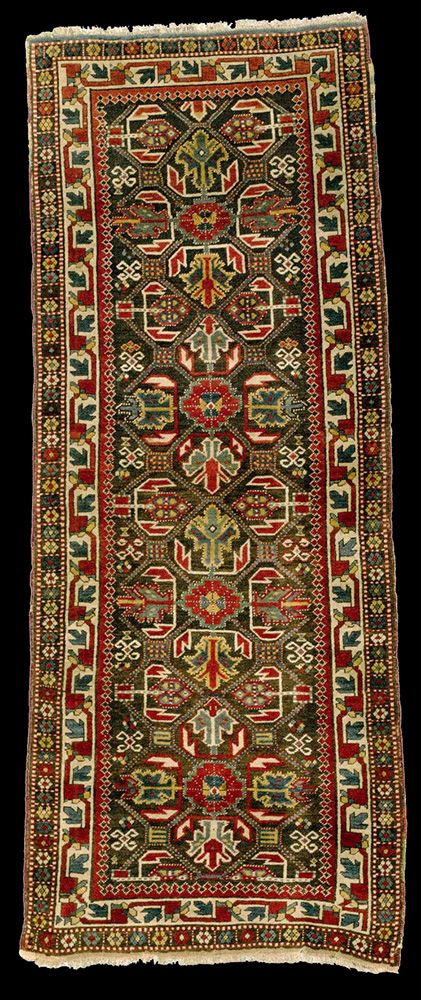
The below piece was offered for sale at Sotheby’s London in
2010, with an estimate of USD 5,000–7,000.
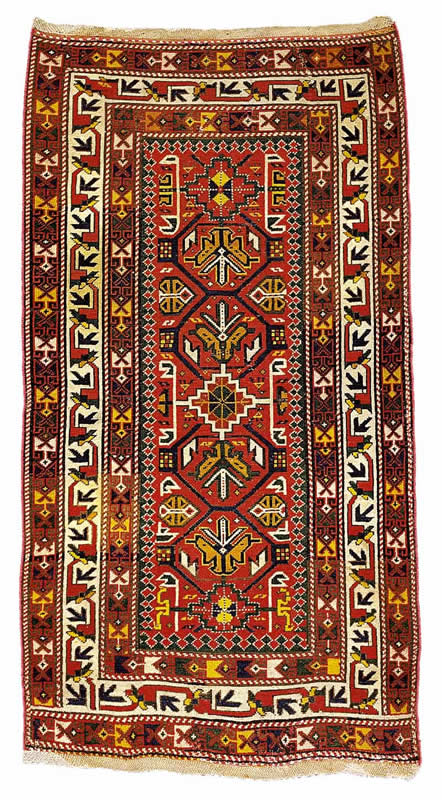
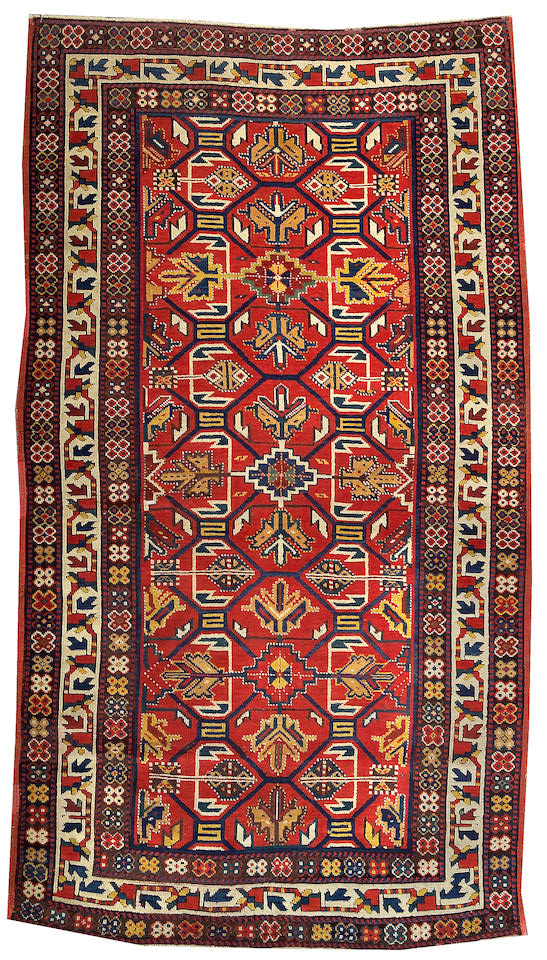
Red-ground examples are also documented. The two pieces
illustrated here entered the market on separate occasions. The latter was
sold at an American auction some years ago, realizing a price of US$4,700.
|
