Three classes
of all-silk carpets of the Safavid period (16th century) are credited to
Kāshān:
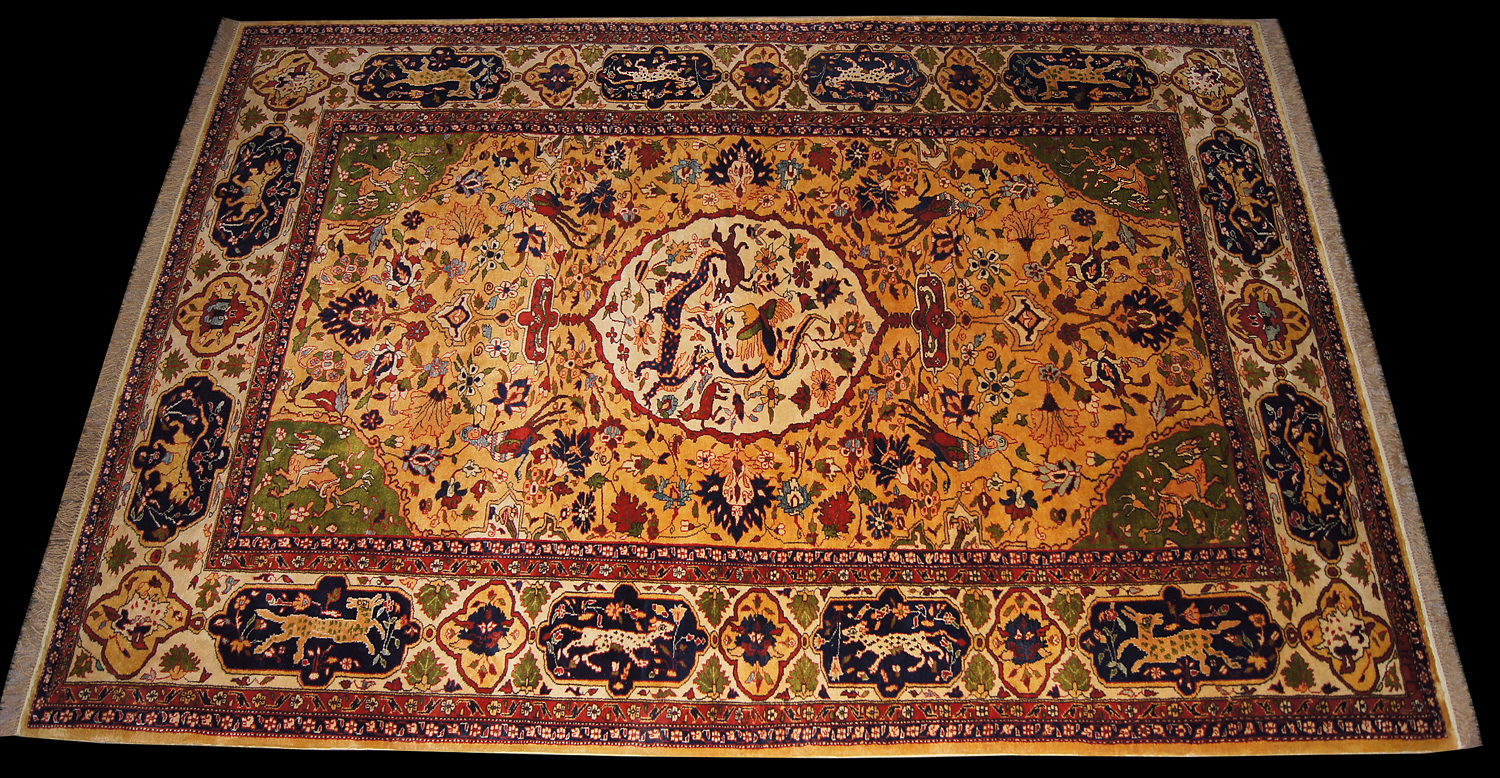
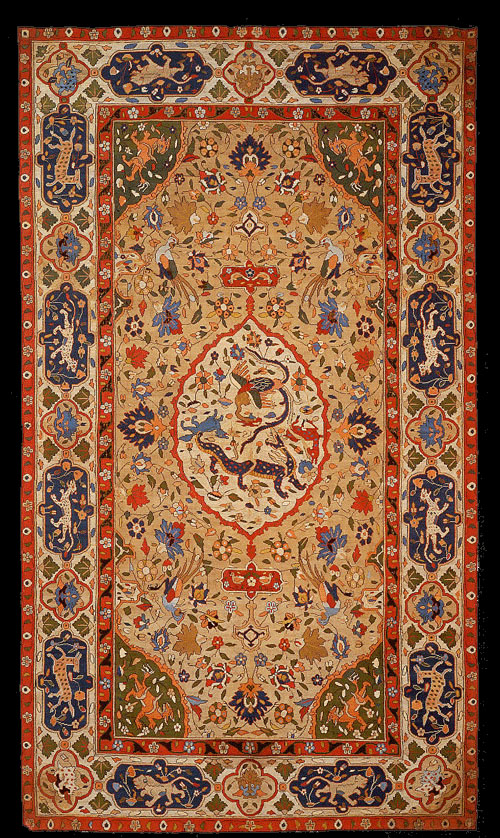
1) The first includes three large extant carpets with medallion systems and
varied hunting scenes that appear between centerpiece and corners. The two
best-known of these are counted among the world’s finest carpets.
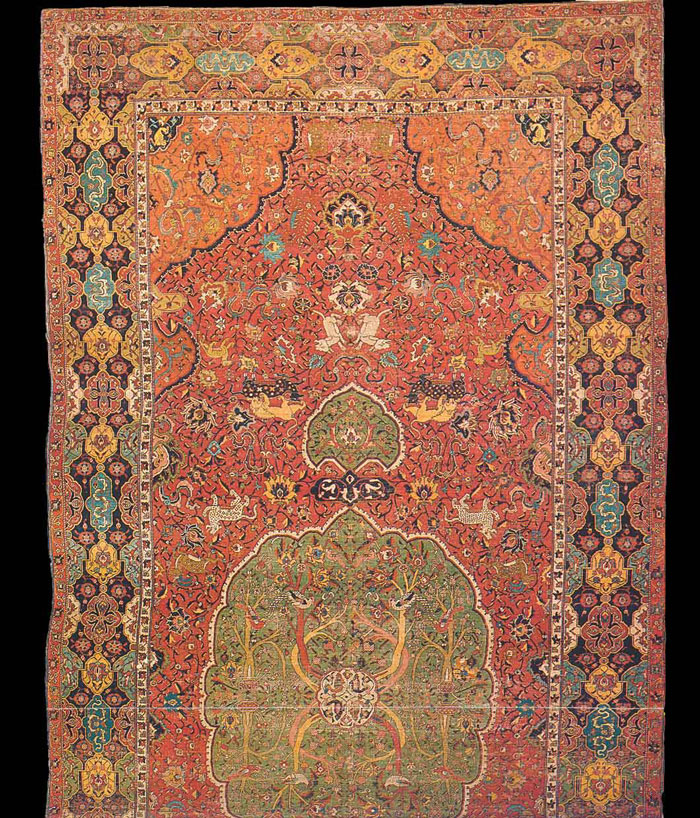
| This
carpet is said to have been presented to the Doge of Venice by Shah
Sulaiman of Persia in 1688. As a gift it was likely to have been new
at the time. It was in the possession of the Morosoni family until it
surfaced at Sothebys London on October 12, 1982 when it sold for
286,000 pounds. Subsequently it was acquired for the Royal Collection
in Saudi Arabia. This is a fascinating carpet that reveals what the
Safavid weavers of the late 17th century were still capable of
producing, despite this period’s tendency to simplification. |
2) The second class is represented by more than a dozen small carpets with
silken pile and prominent red coloration. Most have medallion designs; four
have rows of isolated animal figures or animals in combat.
3) Members of the third class are not pile carpets but rather silken kilims,
in tapestry weave of exceptional delicacy, frequently with bits of metal
enhancing certain colours to provide sparkle. The designs of several include
human or angelic figures. It is thought that a number of silk Polonaise
carpets were also made in 17th-century Kāshān.
From the 17th through the 19th century, nothing is known of Kāshān carpets,
but with the dawn of the 20th century there arose a large commercial
production of pile carpets in both wool and silk. These new carpets rank
among the best Persian products, with some of the most sophisticated
designs, consisting of sleek medallions, curving, blossom-laden vine work,
and repeats of vases with flowers. With Kermān and Tabrīz, Kāshān has been
the principal source for the collector of special pieces—personage rugs,
symbolic rugs, and ornate prayer rugs—otherwise unusual in Iran. Kāshān
carpets are asymmetrically knotted on silk or cotton foundations, depending
upon the fibre of the pile.
|